Author name: Formula Alchemy

scale

Concept to Shelf: What Actually Happens in Scale-Up (and Where Formulas Break) | FormulaAlchemy

Concept to Shelf: What Actually Happens in Scale-Up (and Where Formulas Break) A formula that performs beautifully in a 200g lab batch doesn’t always survive the trip to a 2,000-liter production run. Scale-up isn’t just “make more of the same thing” — it’s where a lot of formulas reveal problems that never showed up at

Concept to Shelf: What Actually Happens in Scale-Up (and Where Formulas Break) | FormulaAlchemy Read More »

fluid

What Makes a Cutting Fluid Fail? Common Formulation Pitfalls in Industrial Lubricants | FormulaAlchemy

What Makes a Cutting Fluid Fail? Common Formulation Pitfalls in Industrial Lubricants A metalworking fluid that performs beautifully in a lab test can still fail on the shop floor within weeks — souring, separating, corroding parts, or triggering skin complaints from machine operators. Cutting fluid formulation looks straightforward on paper (lubricant, water, additives) but the

What Makes a Cutting Fluid Fail? Common Formulation Pitfalls in Industrial Lubricants | FormulaAlchemy Read More »

hlb

HLB Values Explained: How to Pick the Right Emulsifier Blend for Your Formula | FormulaAlchemy

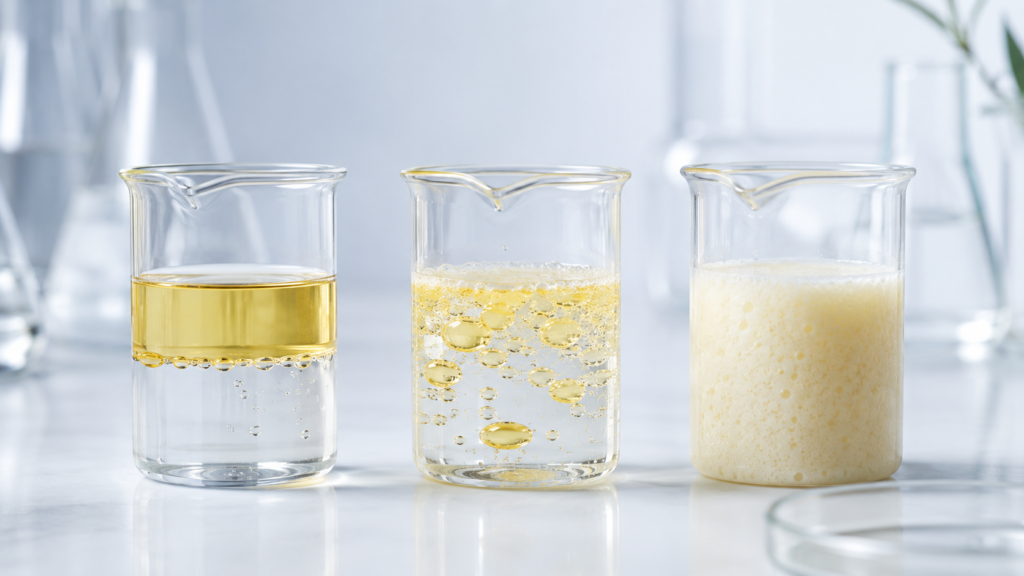
HLB Values Explained: How to Pick the Right Emulsifier Blend for Your Formula Every stable emulsion starts with a number most formulators learned in a hurry and never fully trusted. HLB — hydrophilic-lipophilic balance — sounds simple on paper, but picking the right value (and the right emulsifier combination to hit it) is where a

HLB Values Explained: How to Pick the Right Emulsifier Blend for Your Formula | FormulaAlchemy Read More »

soap calculator

Lye Calculators 101: Why Superfat Percentage Matters More Than You Think | FormulaAlchemy

Lye Calculators 101: Why Superfat Percentage Matters More Than You Think Ask most soap makers what superfat means and you’ll get the right general answer: extra oil left unreacted, for skin-friendliness. Ask why they chose 5% instead of 8%, and the answer gets a lot vaguer. That gap — between knowing the term and understanding

Lye Calculators 101: Why Superfat Percentage Matters More Than You Think | FormulaAlchemy Read More »

uncertainty

Measurement Uncertainty in the Lab: Why ±0.5g Can Mean More Than You Think | FormulaAlchemy

Measurement Uncertainty in the Lab: Why ±0.5g Can Mean More Than You Think Every measurement in a formulation lab comes with an implicit asterisk — a scale reading of “10.0g” doesn’t mean exactly 10.0000g, it means 10.0g within the precision of the instrument and the technique used. Most of the time that margin doesn’t matter.

Measurement Uncertainty in the Lab: Why ±0.5g Can Mean More Than You Think | FormulaAlchemy Read More »

inci

Reading an INCI List Like a Chemist: A Beginner’s Guide to Ingredient Decoding | FormulaAlchemy

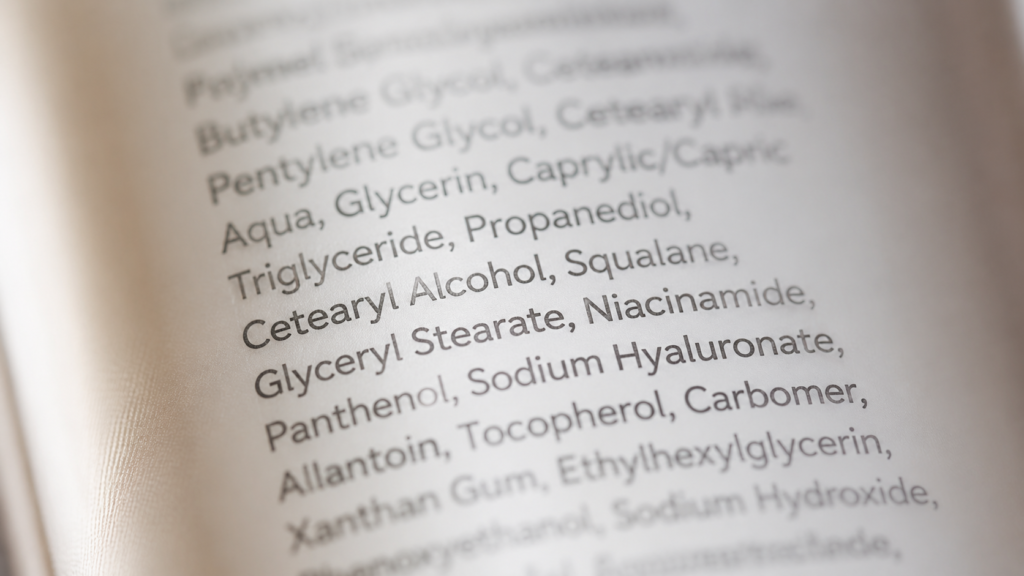
Reading an INCI List Like a Chemist: A Beginner’s Guide to Ingredient Decoding Flip over almost any cosmetic product and you’ll find a wall of unfamiliar Latin and chemical names. To most people it’s noise. To a formulator, it’s a complete technical brief — you can tell what a product is trying to do, roughly

Reading an INCI List Like a Chemist: A Beginner’s Guide to Ingredient Decoding | FormulaAlchemy Read More »

formulation

Reformulation 101: When (and Why) a ‘Finished’ Product Still Needs to Change | FormulaAlchemy

Reformulation 101: When (and Why) a “Finished” Product Still Needs to Change “Finished” is a relative term in product development. Formulas that have been stable, compliant, and profitable for years can suddenly need to change — not because anything went wrong, but because the world around the formula shifted. Understanding the common triggers for reformulation

Reformulation 101: When (and Why) a ‘Finished’ Product Still Needs to Change | FormulaAlchemy Read More »

perfume formulation

The Art of Fragrance — A Perfumer’s Complete Reference

The Perfumer’s Complete Reference The Art of Fragrance Famous formula reconstructions, raw ingredient reference, the formulation process, and safety guidance — all in one place. Formulas are reference reconstructions based on publicly known notes and industry analysis. Exact proprietary ratios remain trade secrets. The Fragrance Pyramid Every perfume is built from three layers, each evaporating

The Art of Fragrance — A Perfumer’s Complete Reference Read More »

Shopping Cart